Racquet Club Marketing Playbook: How to Attract, Engage, and Retain Players
November 20, 2025
Every successful racquet club relies on two things: visibility and loyalty. In other words, you need new players discovering your club, and familiar faces returning week after week. Marketing bridges those goals, turning awareness into real, lasting participation.
This guide is all about creating a marketing approach that works with your schedule and helps your tennis or pickleball club stay visible, attract new players, and keep members engaged year-round.
Inside, you’ll find clear, practical strategies built for facilities of all sizes — whether you’re managing it all yourself or leading a team. Take what resonates, leave what doesn’t, and build a system that fits your club’s goals, bandwidth, and community.
1. Establishing a strong foundation: your pre-marketing game plan
Great marketing starts with preparation.
Ideally, you’ll start planning six to eight weeks before launch — whether you’re opening a new racquet facility, promoting programs, or refreshing your brand. But if you’re working on a shorter timeline, even a little prep goes a long way!
Taking time to research, plan, and align your message around clear goals sets everything else up for success. Think of it this way: every ad, post, and email will lead people somewhere — your website, booking page, socials, or front desk. If those touchpoints don’t clearly represent your club or make it easy to take action, momentum stops there.
That’s why this stage is all about building a strong foundation. Let’s jump in.
Conduct market research
Before you do anything, take time to understand who you’re trying to reach and attract. Start by identifying your core audiences. This could be:
Families looking for weekend activities
Juniors focused on training
Retirees searching for community
Competitive players who just want more court time, and so on.
Then, take a look at nearby tennis and pickleball clubs. What programs do they offer? How do they price and promote them? The goal isn’t to copy, but to see where you can stand out and better serve your players. Even a few quick observations can shape stronger, more targeted marketing and positioning.
Remember, market research for your racquet club doesn’t need to be complicated. It’s all about knowing the players in your community and what they value most.
Action-items:
List your top 2–3 audience types and what motivates each to join or stay.
Review 2–3 local competitors — note their positioning and what they promote most.
Write down at least one area where your club can differentiate (price, programs, community, experience).
Create a recognizable racquet club brand
When your branding is consistent and recognizable across your website, emails, and facility, players know exactly who you are — and that familiarity makes them more likely to visit, book, and stay.
“Branding is the foundation of everything. Without it, your club becomes just another gym, and people make decisions based on price instead of connection. A strong brand attracts members, creates loyalty, and helps your staff stay aligned with a shared vision.”
Define how your tennis or pickleball facility should feel. Are you energetic and social? Professional and performance-driven? Family-oriented and welcoming?
Then, pinpoint what makes your club different. Maybe it’s your coaching expertise, your community-first approach, or your smooth player experience.
Once you’re clear on those details, make sure to align tone and messaging across all customer-facing touchpoints.
Finally, make sure your visuals support your message. Use consistent logos, colors, typography, and photography styles everywhere.
And if you don’t have one already, create a short mission statement or tagline that sums your brand up — something that tells players exactly who you are and why they’ll love being part of your community.
Action-items:
Choose three words that describe your club’s personality.
Create an internal mini style guide on visuals, tone, etc.
Capture your club’s “why” in a few sentences to use internally and in future marketing.
Set up your online presence
Before players ever visit, they’ll look you up online. And that first impression matters. Your online presence helps prospects decide whether your racquet sports club feels credible, welcoming, and worth their time — making it an essential part of your marketing strategy.
This stage is about setting up your digital ecosystem. In other words, you’re simply making sure the core touchpoints are active.
Here’s where to start:
Website — Keep it up to date, mobile-friendly, and easy to navigate so visitors can quickly book, register, or contact your team.
Member Portal— Make sure players can easily log in, book courts, and manage accounts.
Google Business Profile — Claim your listing, add accurate hours, location, and photos.
Social Media Accounts — Choose one or two platforms your audience actually uses and create branded profiles.
Mobile App — Set up your club’s mobile app so members can book, check schedules, and stay connected on the go.
If you want to strengthen your club’s digital presence even further, consider a branded domain or branded mobile app. Both work to unify your digital presence, reinforce your identity, and make your facility instantly recognizable.
Once your platforms are live and branded, you’ll be ready to build visibility and engagement in the next phase.
Action-items:
Optimize your website for UX, speed, and mobile. Use clear CTAs, prioritize SEO, and make essential info (like hours, pricing, and programs) transparent and accessible.
Google your club — do your website, Google profile, and social pages all appear and look consistent?
Add links between platforms so players can move easily between them.Test your mobile experience.
Video Transcript
0:00Welcome everyone to today’s webinar. I’m Ben Verie Chapman, VP of marketing at Court Reserve. We’re going to talk about
0:077 secondssomething that can have a huge impact on your club, your Google business profile.
0:1212 secondsOver the next 10 minutes or so, I’m going to walk through a story that starts with a problem most clubs don’t even realize they have, and it will end
0:2121 secondswith a concrete plan that you and your team can actually implement this week.
0:2626 secondsUh some housekeeping before we kind of get started here. Please keep your uh microphones muted. There will be a Q&A
0:3535 secondsopportunity at the end. Uh I encourage you to use the chat uh available here.
0:4141 secondsWe have Jennifer, the amazing Jennifer, um assisting me here today. She’ll be able to um help you out in the in the uh
0:4848 secondsin the chat there. Um if not, I’ll get to those those questions at the end.
0:5353 secondsAlso, I’m happy to share that I will be emailing every attendee, every every registrant uh with these slides uh with
1:021 minute, 2 secondsa recording and a transcript. So, you can take this back and and kind of study it yourselves. So, uh let me let me kind
1:081 minute, 8 secondsof get started here. Um I’m going to paint a picture for us first. So, imagine a family just moved
1:171 minute, 17 secondsinto your into your area, your zip code, and they’re looking for somewhere to play. They do what everyone else does.
1:251 minute, 25 secondsThey Google it. Three clubs pop up.
1:291 minute, 29 secondsYours isn’t there. So, you actually just lost a potential member and you had no idea. This is the invisible club
1:371 minute, 37 secondsproblem, and it’s a lot more common than you might think. So, let’s look at the data.
1:431 minute, 43 secondsAlmost half of all Google searches have local intent. Uh that basically means somebody is searching for something nearby.
1:521 minute, 52 secondsAnd 76% of those searchers actually visit a business within 24 hours.
1:591 minute, 59 secondsOver a quarter make a purchase. So that’s some you know serious numbers there. So your Google business profile is really your front door, your kind of
2:082 minutes, 8 secondsdigital front door uh for all these folks who are searching things um in your in your zip code.
2:152 minutes, 15 secondsSo what exactly is a Google business profile, you might ask? It’s basically your free listing that shows up in a
2:222 minutes, 22 secondsGoogle search and Google maps. Think of it like your digital storefront. It shows everything a potential member may
2:312 minutes, 31 secondsneed. your club name, your address, your hours, photos, reviews, even a direct link to, you know, book your court. And the best part, this is completely free.
2:442 minutes, 44 secondsHere’s a great example of uh Ashley and Tim, found as a court reserve. They also own a fantastic pickle ball facility uh
2:522 minutes, 52 secondshere in St. Augustine, Florida. They have a very well-built out profile. So, when you’re looking for pickle ball in St. Augustine, there’s a very very
3:003 minutesstrong chance that Old Coast pickle ball is going to come up. And here’s how it looks on Google Maps.
3:073 minutes, 7 secondsI’m sure all of you have seen a Google business profile, maybe without realizing it. Um, but this is kind of basically the two ways that you can kind of discover these these profiles.
3:193 minutes, 19 secondsOkay, so here’s our game plan for this webinar.
3:233 minutes, 23 secondsUm, we’re basically going to go through five steps that will take your profile from invisible to irresistible. Uh,
3:313 minutes, 31 secondswe’ll go through each one with real examples and practical tips that you can apply right away. So, let’s jump into
3:393 minutes, 39 secondsstep one. The most important thing you can do right now is claim and verify your profile, your Google business
3:473 minutes, 47 secondsprofile. If you have not done this, nothing else really matters. Google may in fact have already created a listing
3:543 minutes, 54 secondsfor your club with incorrect information. You need to go claim it so you control what people see when they
4:024 minutes, 2 secondssearch for things in your zip code. Um, you can basically head over to business.google.com,
4:094 minutes, 9 secondssearch for your club or your facility and start that verification process. It usually takes a few days. It can take up
4:174 minutes, 17 secondsto a couple of weeks depending on uh the type of verification that you’re required to do.
4:234 minutes, 23 secondsStep two is to complete every single detail of your Google business profile.
4:294 minutes, 29 secondsGoogle rewards profiles that are fully filled out. We’re talking 70% more
4:364 minutes, 36 secondslikely to attract visits if you complete 100% complete your profile. uh go through every field. Your exact business
4:454 minutes, 45 secondsname, your correct address, phone number, local phone number, website link, your hours, including holiday
4:524 minutes, 52 secondshours, all the relevant categories and attributes. Just try not to skip anything.
4:584 minutes, 58 secondsHere’s a really cool tip that we’ve learned about. Uh categories are basically your secret weapon when it comes to Google. The category tells
5:075 minutes, 7 secondsGoogle when to show your profile during a search on uh Google search or Google Maps. So, your primary category is the most important thing for your business.
5:185 minutes, 18 secondsPick one that best describes, you know, your main business. If you’re a pickle ball club, you want to have your primary category as a pickle ball club. Uh then
5:275 minutes, 27 secondsadd every secondary category that you can think of that applies to your business. If you have, you know, tennis facilities, if you have a pool, a gym, a
5:365 minutes, 36 secondsgolf sim, add those two. Basically, the more relevant categories means more searches where you can have an opportunity to appear.
5:475 minutes, 47 secondsStep three, this is where we start to tell the visual story. Photos are super important for your profile. This is
5:555 minutes, 55 secondsagain where many clubs kind of leave the opportunity on the table. Uh, businesses with photos get 42% more direction requests.
6:056 minutes, 5 secondsUh, you may want to have things like exterior shots so people can find you when they’re driving around, court
6:126 minutes, 12 secondsphotos, action shots of real members at your club, event photos, even photos of your team and your front desk. And you
6:206 minutes, 20 secondsshould really be refreshing these every every few months. Here’s a great example of Wolverine Pickle Ball uh in Ann
6:286 minutes, 28 secondsArbor. They have a great uh suite of photos on their profile. You can get a sense immediately of what it would be
6:366 minutes, 36 secondslike to be at this club. Um and it just does a great job of of kind of selling selling the location.
6:436 minutes, 43 secondsStep four, super important, is reviews.
6:476 minutes, 47 seconds98% of consumers read online reviews before they choose a local business. This is from a Bright Local 2024 survey.
6:566 minutes, 56 secondsThat’s huge. The key is making it easy.
6:596 minutes, 59 secondsSo, after a great lesson, send a follow-up email with a direct link. Put a QR code on your front desk asking for
7:087 minutes, 8 secondsreviews. And if you’re using Court Reserve, which I know probably most of you are, you can actually automate some of this uh and request reviews after events and lessons.
7:197 minutes, 19 secondsHow you respond to reviews matters just as much as the reviews themselves. For positive reviews, you want to be
7:277 minutes, 27 secondsthanking those people personally and invite them back. For negative reviews, a a fast response time is critical. You
7:367 minutes, 36 secondsknow, acknowledge their experience and take it offline if you need to. You know, give them a call. But remember,
7:437 minutes, 43 secondsevery single response that you have is a public audition for your next member.
7:487 minutes, 48 secondsFuture prospects will judge your club by how you handle things like criticism.
7:557 minutes, 55 secondsUh here’s a couple of examples that I found um of some actual real reviews and you can see there the responses from the
8:038 minutes, 3 secondsowner. Uh this is just such a great lowhanging fruit uh for folks. Step five, you’ve done all that. Great.
8:118 minutes, 11 secondsYou have to stay active, right? So, um you you want your profile to sort of have uh have some personality, have some
8:198 minutes, 19 secondssome life to it. So, Google posts um are actually like mini social media updates that appear right on your business
8:278 minutes, 27 secondsprofile. Uh you can post about pretty much anything, events, offers, what’s new, general updates. But the key here
8:348 minutes, 34 secondsis consistency. Um you need to aim for at least one post per week. Again,
8:418 minutes, 41 secondsGoogle is rewarding profiles that uh are active, have activity on them. Uh and this will increase your visibility when people are searching.
8:518 minutes, 51 secondsHere’s a very simple content calendar that you could use. Um you can basically start using this right away. You know,
8:598 minutes, 59 secondsMonday you could feature uh member spotlight. Uh Wednesdays, you know, you could talk about some upcoming events
9:069 minutes, 6 secondsthat you have. Friday, run a weekend special or an offer. Sunday, start previewing the following week. Uh pro
9:149 minutes, 14 secondstip here, if you have the bandwidth, if you have the team, uh batch create your posts at the start of each month. If
9:229 minutes, 22 secondsyou’re up to speed with your programming, you should have at least some visibility into what’s coming at your club. Uh so you’re not kind of scrambling to get this done every day.
9:339 minutes, 33 secondsHere’s another feature that many clubs overlook. uh Google Q&A. So basically anyone can come to your profile and ask
9:429 minutes, 42 secondsand answer questions on your profile. Um if you don’t control the narrative as the owner operator, someone else will.
9:519 minutes, 51 secondsUh so the smart move here is to actually seed your own FAQ, your frequently asked questions. You can ask the common
9:589 minutes, 58 secondsquestions yourself and provide and provide the official answers and then you can come in and monitor those weekly for any new questions that you would
10:0610 minutes, 6 secondshave. This is different from reviews. Uh this is, you know, this is not somebody reviewing uh your your facility. This is
10:1410 minutes, 14 secondssimply somebody asking about it. So it’s a slightly different uh angle than the reviews there.
10:2010 minutes, 20 secondsOkay. So we flew through that, but now you’ve done all the hard work. You have the perfect profile. Uh your profile is
10:2810 minutes, 28 secondsclaimed. It’s complete. You have great photos. You’re getting reviews. You’re posting regularly. But here’s the thing.
10:3710 minutes, 37 secondsWhen a player finds your club on Google and wants to book, what actually happens?
10:4210 minutes, 42 secondsThey probably have to leave Google. They have to go to your website. They have to navigate some of your uh you know, booking system there. And most people
10:5010 minutes, 50 secondsdon’t actually make it. It’s kind of a broken journey. That is until now.
10:5610 minutes, 56 secondsWe’re very happy to announce uh a recent launch of ours called Reserve with Google. So, we actually partnered with
11:0311 minutes, 3 secondsGoogle themselves. They invited us uh to partner with them as one of their reservation partners. So, what does this
11:1011 minutes, 10 secondsmean? This puts a book online button directly on your Google business profile. So, players, anyone searching
11:1811 minutes, 18 secondsfor your club can now tap this. they land right into the public booking flow.
11:2411 minutes, 24 secondsThere’s no website. There’s no account to create. There’s no membership required. This is basically a 247 booking channel uh that runs itself once
11:3311 minutes, 33 secondsyou enable it. Uh it’s included at no extra cost on most of our our plans. We can provide some more information about
11:4011 minutes, 40 secondsthat. What does it look like? These are live customers that we have right now.
11:4411 minutes, 44 secondsUh we have over 400 clubs um using this feature. So, you’re going to get a big book online button on your
11:5311 minutes, 53 secondsGoogle business profile. It really couldn’t be any easier than that. Um, and you know, it looks great.
12:0012 minutesSo, how does it actually work? Well, a player searches for courts near them, as we were discussing earlier. Pickle ball near me, uh, pickle ball lessons near
12:1012 minutes, 10 secondsme, you know, and because your profile is so great, you’re now going to appear in those search results or the the results on a map. um they are basically
12:1912 minutes, 19 secondsgoing to land in your public booking page. They’re going to browse your available court time or events and they’re going to pick a time and pay and
12:2812 minutes, 28 secondsthey’re confirmed. It’s as simple as that. The whole thing takes less than a minute. Um there’s no friction. There’s no drop off. Uh we also have the added
12:3712 minutes, 37 secondsbonus here of uh providing a digital waiver ahead of them coming to your facility. So they can literally arrive
12:4412 minutes, 44 secondsand start playing, start enjoying your facilities. Super cool. Here’s the big picture. Uh reserve with Google isn’t just about filling empty court time.
12:5612 minutes, 56 secondsThis is actually about building your membership pipeline. So I believe the primary function um of a club is to
13:0313 minutes, 3 secondscreate new players uh not only for your club but for the community, for the for the industry. um stats indicate that
13:1213 minutes, 12 secondsbetween one and you know uh one in six of us are going to be playing a racket sports by the end of next year. So this is not this thing is not going anywhere.
13:2113 minutes, 21 secondsThere’s more and more people entering the space. So um basically every player who books through Google uh automatically becomes a lead in court
13:3013 minutes, 30 secondsreserve in your court reserve application. From there now you can follow up after their visit. You can invite them to more clinics, leagues,
13:3813 minutes, 38 secondsevents. you can move them towards a full membership. So, one tap on Google basically creates a member who could stay with you for years.
13:4913 minutes, 49 secondsThe best part, yes, it gets even better.
13:5113 minutes, 51 secondsUm, you can enable this thing in just a few minutes. So, you’re going to go into your settings in court reserve, find
13:5813 minutes, 58 secondsyour portal settings, you’re going to see public bookings, you’re going to activate reserve with Google. Um, that’s
14:0614 minutes, 6 secondsit. Once you do that, a book online button will start appearing on your Google business profile, providing you built it out. Um, it’s included at no
14:1514 minutes, 15 secondsextra cost for customers on most of our uh pricing plans there. You’re also going to have an active payment processor if you’re in the US or Canada.
14:2814 minutes, 28 secondsSo now, what happens once you’re you’re live with Reserve with Google, you want to see if it’s actually working. So you can’t really improve things if you can’t
14:3614 minutes, 36 secondsmeasure it. So Google business profile actually gives you a free dashboard um
14:4314 minutes, 43 secondsof insights that show you how people are finding you on Google. Um how many people see your profile, what sort of
14:5014 minutes, 50 secondsactions are they taking and also how things like your photos or your reviews are performing compared to similar businesses. So you can check these
14:5914 minutes, 59 secondsweekly or monthly and you can start to see trends.
15:0315 minutes, 3 secondsHere’s an example of what that looks like. Um, this is just a screenshot of a dashboard from uh, you know, one of our
15:1015 minutes, 10 secondsone of our customers, Anonymized. So, you’re just going to see some really cool data here. It’s very simple, very easy to understand, but it gives you a
15:1815 minutes, 18 secondslot of great insights about that local search activity um, around your business.
15:2515 minutes, 25 secondsSo before we wrap up, uh let’s kind of go through some of the mistakes that I’m seeing clubs make uh when it comes to their Google business profile.
15:3515 minutes, 35 secondsUh you really don’t want to have too many keywords in your business name.
15:4015 minutes, 40 secondsOkay, this will actually get your your business profile suspended because Google doesn’t like, you know, profiles that try and sort of cheat the system.
15:5015 minutes, 50 secondsSo, um, you know, there’s kind of restaurants out there is like restaurant near me. That’s literally the name of their their restaurant. You know, that’s
15:5815 minutes, 58 secondsprobably going to get you suspended from Google. So, just be mindful of the keywords that you put into your business name. Um,
16:0616 minutes, 6 secondsignoring those negative reviews, you know, I can’t stress enough um what that communicates to others who are looking
16:1416 minutes, 14 secondsat your your facility. you know, you need to get in front of those negative reviews if you are getting them uh responding and and trying to, you know,
16:2316 minutes, 23 secondsreally show others that you you’re taking action there and you have a live and active uh profile. Stock photos, you
16:3016 minutes, 30 secondsknow, don’t use stock photos. It’s better to have a bad photo from your iPhone. Um, we’re not all photographers
16:3816 minutes, 38 secondsafter all, but stock photos are going to again uh decrease the value of your profile with regards to Google. Um, so try and get some real photos in there.
16:4916 minutes, 49 secondsUm, it it will definitely help kind of present your your business profile as a real living thing. And uh, you know,
16:5716 minutes, 57 secondsdon’t just set up your profile and forget about it. You really need to come back and keep this thing, you know,
17:0417 minutes, 4 secondsmoving, right? um make sure everything is up to date. Again, Google will downrank your profile if you’re not
17:1217 minutes, 12 secondsgoing in there and sort of updating it and and publishing things and keeping ahead of stuff. So, you just want to keep Google happy basically. Um so, this
17:2217 minutes, 22 secondsis basically your action plan. Like I said, at the very top, we are going to send all of these slides around the recording too. So, you don’t have to
17:3117 minutes, 31 secondsmemorize any of this. You can actually use this as your guide. Um, but it’s very straightforward. You’re going to claim your profile. Like I said, if you
17:3817 minutes, 38 secondsdo anything, go do that. Um, nothing else matters unless you go claim and verify your your uh profile at business.google.com.
17:4717 minutes, 47 secondsYou’re going to fill out every detail.
17:4917 minutes, 49 secondsAs I said, you’re going to go and enable that reserve with Google and the public booking in court reserve. That’s going to give you the book online button on
17:5717 minutes, 57 secondsyour profile. There’s no other way to get it. um without court reserve. None of our competitors offer that. Uh you’re
18:0318 minutes, 3 secondsgoing to upload 10 real photos or 10 or more real photos and you’re going to ask five of your happiest members for some
18:1118 minutes, 11 secondsreally amazing reviews, five-star reviews. Uh you’re going to start publishing some of your own content on
18:1818 minutes, 18 secondson Google and seed your Q&A and then try and keep that up every week, every month. If you follow this plan, I can
18:2618 minutes, 26 secondspromise you, you will see results within 30 days. You’re going to go into your dashboard on the profile and you’re going to see all of your stats creeping
18:3518 minutes, 35 secondsup. Um, but you do have to tend to that yard. It’s it’s very much like tending to your, you know, your plants and your vegetables. You have to go in there and like show it some love.
18:4618 minutes, 46 secondsSo, remember that family who searched for a club and yours didn’t show up?
18:5218 minutes, 52 secondsWell, if you follow the steps that I’ve laid out today um and activate reserve with Google, next time they search, your
19:0019 minutesclub is going to be the one that they find. They’ll be able to go and book a call even before they leave the search results. Uh that’s me done with my
19:0919 minutes, 9 secondsslides. Thanks so much for joining. I’m happy to take any any questions or uh feedback that you have. Please drop that in the chat.
19:1919 minutes, 19 secondsGreat, Ben. Thank you so much. Uh we do have two questions from Joe. Um the first um is specific to him. Um but the
19:2919 minutes, 29 secondssecond I think could several people on here could could benefit from the second question. The first question is if he
19:3619 minutes, 36 secondsdoes not have a physical location or set hours um or a phone number um would this work for him?
19:4519 minutes, 45 secondsI’m I’m going to hedge on it not working because you do need a you do need a physical location for a Google business
19:5219 minutes, 52 secondsprofile. That’s how you verify your profile with Google. So, I’m going to hedge on saying no, but we can certainly
19:5919 minutes, 59 secondsverify that for you um after this webinar and follow up with that answer.
20:0420 minutes, 4 secondsOkay. First, perfect. And then next um where I think we can u help um is is it
20:1320 minutes, 13 secondspossible to limit public res registration just a special events like a tournament or a special session? And I
20:2020 minutes, 20 secondshave uh an answer on that one. Uh basically we can make a membership type specifically for public bookings and
20:2720 minutes, 27 secondsthen make it not public. Um most events um only allow to be public on a specific event. So basically, you would just
20:3520 minutes, 35 secondsallow specific events to be public. Um, and then Joe, I do see that you’re looking for some more direction. We will have someone reach out to you after this
20:4420 minutes, 44 secondscall uh so that so that we can help a little bit further. Um, next, Ben, Nathan is asking, “How does the booking
20:5220 minutes, 52 secondswith Google feature work with a Brieo integration?” Brievo being the access control, correct?
21:0021 minutesYes.
21:0121 minutes, 1 secondYeah. So we uh Brievo would work as normal as it does with your with your court reserve
21:0921 minutes, 9 secondssetup. Um it’s planned that we fully integrate the public booking with the access control
21:1621 minutes, 16 secondsuh partners that you may be using Brevo remote lock and such. So um Brievo would work as normal uh as it does with court
21:2421 minutes, 24 secondsreserve right now and we’re planning that integration connection with the public booking flow.
21:3121 minutes, 31 secondsWonderful. As of now, that’s all of the questions that we have.
21:3521 minutes, 35 secondsGreat. Well, like I said, um I’m going to share this uh presentation with everybody who registered and joined
21:4321 minutes, 43 secondstoday. Um I encourage you to go look at some of these links. We have a setup guide uh on the court reserve public
21:5021 minutes, 50 secondsbooking and reserve with Google. And also, I’m providing a link to Google’s official kind of how to go claim your
21:5821 minutes, 58 secondsGoogle business profile. So you can actually follow the steps that they recommend and you’ll see some of the requirements around verifying your uh
22:0522 minutes, 5 secondsyour location. Um Ravi looks like you have raised your hand there. Not sure how that works.
22:1322 minutes, 13 secondsYes, I can. There’s a Yes, there’s a question from Ravi. As our facility is being built, but we
22:2022 minutes, 20 secondslaunched a membership drive, can this be added with Google integration? I understand we need to have our signature or our
22:2822 minutes, 28 secondssignates or your sign signage on the door for Google registration.
22:3422 minutes, 34 secondsUm, Ben, I would recommend that
2. Building your club’s digital marketing engine
Once your club’s online foundation is in place, it’s time to build momentum. Your digital marketing engine is what brings your brand to life — driving awareness, engagement, and long-term growth.
In this section, we’ll look at how to create a digital marketing strategy — helping your tennis and pickleball club maintain visibility, earn trust, and stay top of mind with players.
Boost awareness and engagement with social media marketing
Social media helps build awareness, strengthen relationships, and keep players engaged between visits. When used intentionally, it turns everyday moments into opportunities to connect and grow your community.
Post with your players in mind — what they care about, what makes them smile, and what might inspire them to get back on court. (Your market research from earlier will help here.)
Try sharing posts about:
What makes your brand unique
Upcoming programs, events, and socials
Member milestones and wins
Coaching tips or behind-the-scenes moments
Local partners, causes, or updates
Facility upgrades, new services, or seasonal offerings
Consistency matters here — even one or two posts a week keeps your facility visible. Use location tags and local hashtags to reach nearby players, and don’t forget to engage: reply to comments, thank members for tagging you, and reshare their posts.
Above all, be authentic. Let your brand’s people, energy, and personality shine.
Action-items:
Select content themes to rotate (ex: events, member stories, coaching tips).
Create a media folder of photos to use in future posts.
Set aside time every week to reply to comments, reshare tagged posts, and so on.
Nurture player relationships with email marketing
Think of email marketing as your tennis or pickleball club’s direct communication line to its community. Use it to send:
Weekly or monthly newsletters
Program or event promotions
Seasonal announcements or special offers
You can send these emails to everyone in your contact list or take it a step further by segmenting your contacts, so each message feels more personal. For example, new members might receive onboarding tips, active players get event updates, and inactive players hear from you with a friendly check-in or offer.
In any case, keep emails short and conversational. Lead with the most useful detail, write clear subject lines (“Clinics Open for November” beats “October Newsletter”), and always include one next step — register, book, or learn more.
You can also automate key messages to save time and stay consistent without adding to your workload. Consider automating email sequences for:
Welcome emails for new members
Registration or reservation confirmations and reminders
Post-event thank yous or surveys
A few thoughtful, well-timed emails (even automated ones) can keep players engaged, connected, and proud to be part of your community.
Action-items:
Decide which types of emails you’ll send (monthly update, event reminder, etc.).
Create a reusable template with your logo, contact info, and booking link.
When ready, automate one recurring email like a welcome note or event reminder.
Two examples of OCP’s newsletter email blasts promoting upcoming clinics and events.
Drive visibility and attract new players with paid ads
Paid ads are a powerful way to get your facility in front of new players — especially if you’re looking to increase bookings, sign-ups, or registrations. Start small, target locally, and focus on what drives real sign-ups.
Social ads are one of the most effective ways to start reaching new players. Boost a post that’s already getting good engagement or create a simple ad promoting your offerings. Target by location, age, and interests like pickleball,tennis, or padel to reach people nearby who are most likely to play.
Pair social ads with Google Ads to capture players actively searching for clubs like yours. Use specific, local keywords — “pickleball near me” or “tennis lessons [city name]” — and link straight to a page where they can register or book a court.
Keep in mind that visuals make a big difference. Use real photos from your club — players on court, smiling members, your pros in action. Authentic images feel relatable and typically build trust faster than stock photos.
From there, test, learn, and refine. If an ad isn’t performing, don’t be afraid to pause it and try a new image or message. Paid ads work best when you treat them as experiments — small, quick tests that show what resonates with your audience.
Action-items:
Define your goal before spending. Are you promoting awareness, event sign-ups, or memberships?
Set a budget ($5–10) and start with one platform.
Focus on a single message or offer per ad rather than trying to promote everything at once.
3. Offline club marketing and community growth
Offline marketing is how your club promotes itself in the real world — through interactions, events, and local presence. These strategies help your club grow through reputation and word of mouth.
Let’s take a look.
Create a club experience that markets itself
Every time a player walks into your club, they’re experiencing your brand. From how easy it is to book a court to how staff handle rain delays, those small details shape how people talk, think, and feel about your club.
Step back and evaluate your racquet facility through a player’s eyes. Is booking quick and intuitive? Do they feel welcomed at check-in? Are programs organized and communication clear? When you understand their experience, you can spot friction and start fine-tuning.
When the experience feels easy and enjoyable, players notice. They talk, refer, and invite friends — not because you asked them to, but because they believe in what your racquet facility delivers. That’s loyalty in action, and it’s the kind of marketing that can’t be bought.
Action-items:
Ask a few members for honest feedback about what feels easy and what doesn’t.
Go through your club experience as if you were a first-time player. Add one thoughtful touch that shows players you care — a warm greeting, quick check-in, or follow-up message.
Recognize staff who consistently create positive player experiences.
Host community events and tournaments that build buzz
Events and tournaments build connection, visibility, and loyalty. They turn your club into a hub of local energy, where players, families, and sponsors all come together for something memorable.
Think beyond your regular programming. Host open houses, charity fundraisers, themed mixers, or seasonal tournaments that bring players, families, and local partners together. Each event should feel like an occasion — something outside the routine that draws attention and builds excitement around your club.
Share highlights and photos, thank participants and sponsors publicly, and invite attendees to the next opportunity to get involved. These touchpoints turn one-time visitors into familiar faces and build lasting goodwill in your community.
When done consistently, these events become part of your club’s identity — helping you grow through connection, reputation, and word of mouth.
Action-items:
Plan one or two special community events or tournaments per season.
Capture content during events and share it online while enthusiasm is fresh.
Follow up with attendees to thank them and invite them back.
Consider local partnerships and sponsorships
Partnering with nearby businesses and organizations expands your reach, builds credibility, and roots your brand deeper in the community you serve.
Look for partners who share a similar audience. Think fitness studios, physical therapy clinics, sporting goods stores, or local cafes where your members already spend time.
Then, cross-promote each other through flyers, email mentions, or referral programs. Or, collaborate on something interactive — like a joint event, demo day, or community open house that introduces both of your audiences to something new.
Sponsorships are another way to build visibility and add steady revenue. Offer local businesses opportunities that fit your space and brand, from tournament sponsorships and banner placements to event partnerships.
When done right, these relationships create shared pride, local energy, and a sense that your club is part of something bigger.
Action-items:
List 3–5 local businesses or organizations that align with your members’ interests.
Feature your partners in newsletters, social media, or around the club to highlight collaboration.
Create a small sponsorship package that offers local visibility (banners, events, or digital mentions).
Use discounts, trials, and special offers strategically
Players are more likely to join or return when it’s easy to take that first step. Free lessons, guest passes, and short-term trials remove hesitation and give players a low-pressure way to experience your club firsthand. These offers get new players in the door — and the experience you deliver makes them want to stay.
For existing players, small promotions — like limited-time offers, bonus clinics, or bring-a-friend passes — keep things fresh and give members a reason to invite others.
Every offer is a chance to strengthen relationships and grow your base. The goal is to reduce friction and make it easy for players to join, return, and stay connected.
Action-items:
Promote offers consistently across your website, email, and front desk signage.
Track which offers drive the most sign-ups or returns — and repeat what works.
Pair offers with a follow-up email or text that invites players to join long-term.
4. Developing a retention strategy at your racquet club
Getting players to sign up is just the first step. The real challenge (and opportunity) is keeping them engaged, connected, and excited to stay. That’s where retention marketing turns conversions into lasting loyalty and consistent revenue.
Here are a few proven strategies to strengthen retention.
Give players something new to look forward to
An evolving experience gives players a reason to return and shows them that your club is dynamic, thoughtful, and invested in making their experience better.
Rotate programs and events — Switch up your calendar each season with new formats, themed leagues, short-term series, and tournaments that keep players curious and involved.
Expand your offerings — Introduce upgrades, amenities, or add-on services — like a pro shop, hydration station, or video-replay services — that enhance convenience and create more reasons to visit.
Personalize communication — Use member data and feedback to send tailored updates, recommendations, and reminders.
A loyalty or referral program helps you strengthen retention while turning your happiest players into your best advocates.
Begin with identifying behaviors worth rewarding such as consistent bookings, event participation, or member anniversaries. Then, tie each milestone to a clear benefit, like free guest passes, early-bird access, or redeemable account credits.
From there, build a referral loop that benefits everyone. Give current members a reason to share your club with others — and make sure new players feel welcomed when they join.
At its core, loyalty marketing is community-building — showing members their support matters and that you’re invested in them just as much as they’re invested in you.
Action-items:
Survey members to learn what kinds of rewards or recognition they value most.
Create a simple reward structure with clear incentives for both loyalty and referrals.
Partner with local businesses to offer shared rewards or perks for loyal members.
Run re-engagement and win-back campaigns
Players drift for all kinds of reasons — busy schedules, new commitments, or simply falling out of routine. Re-engagement campaigns help you reconnect before they disappear for good.
The key is spotting those players early. Identify inactive members and segment them by how long they’ve been away. Craft messages that feel personal: “We miss seeing you on the courts” or “Come check out what’s new this season.” And then, pair these notes with a small incentive like a guest pass or limited-time discount to make returning easy.
Tools like Patch Retention make win-back campaigns easy to manage — and even easier to personalize. When integrated with CourtReserve, Patch enables you to:
Automatically identify inactive or at-risk members and trigger reminders after 30, 60, or 90 days of inactivity.
Re-engage players with personalized messages, exclusive offers, or reminders about upcoming programs and events.
Set advanced triggers to automatically send the right message at the right time — based on membership status, skill level, transactions, or activity history.
This keeps your outreach running in the background — consistent, personal, and perfectly timed to bring players back before they drift away.
Action-items:
Audit your player database to identify patterns in inactivity — look for seasonal dips or recurring drop-off points.
Test different message timings and incentives to see which combinations drive the most returns.
Run a limited-time “Welcome Back Week” with discounted court fees or clinics to encourage returning members.
Video Transcript
0:03
Hi everybody. Welcome to the webinar today. We’re excited you’re here. We’re going to get started in about uh 3 or 4
0:09
minutes. So hang with us.
2:05
Hi everybody. Welcome. We’re going to get started here in about two minutes.
2:56
Hi everybody. Thanks for being here. We’re going to start in about one minute.
3:35
All right, everybody. Thank you for jumping on today. We’re excited you’re here. Thanks for taking time out of your
3:40
busy schedules to be with us. My name is McKay Allen. I’m the CEO of Patch. We have uh Tim uh Owens from Court Reserve
3:47
who’s in the background as well. And uh we’re so pumped to be with you today to talk specifically about how four clubs
3:53
are using this patch court reserve integration to drive more revenue. So we are going to really dive into use cases.
4:00
We’re going to share examples of emails and text campaigns they’re using. It’s going to be awesome. So we’re excited to
4:08
uh to do this with you today. Uh two quick housekeeping items before we get started. First and foremost, uh we want
4:15
you to know this webinar is being recorded so you can share it with people at your at your club, at your business,
4:20
colleagues, whatever. And then the second thing is we do want this to be interactive. So if you go to the little question area or the chat area, um leave
4:28
us a message there and we’ll address those as we go and then we’ll pause at the end as well. The other item is we
4:34
don’t want this to be an hour, hour and a half webinar. I’ve been on a lot of those and they can be they can be uh
4:40
lengthy. So, we’re going to try to keep this relatively short and be out of here in 35 to 45 minutes. So, um with that,
4:47
thank you for being here again and and we’re excited for it. We’ve um uh there I think there’s uh about a hundred clubs
4:54
that are registered for this event. So, we’re excited to excited to talk to you all today. Um all right, first thing is
5:00
about patch. Um what do we do? Essentially, uh, we’re a platform that
5:05
allows you to turn your one-time players into longtime members to keep those members to upgrade members. And clubs
5:12
use us for texting, email, and customer retention. Uh, you’ll see that more in depth in a moment, but that’s kind of
5:18
the the background, right? Texting, email, and customer retention automations. How does the court reserve
5:24
and patch integration work? Well, basically, it automatically automatically syncs your court reserve
5:30
data to patch. So everything from contact fields to order finished events.
5:36
So check-in status, did they show up? Are they a member? Are they on a trial period? Um even your pickle ball
5:42
ratings. And then what’s next? We’ll talk about this at the end end a little bit as well, but just advanced check-in
5:48
data, more specific detail about what exactly they’re attending, what they’re checking in for, which I think is really
5:55
important. We’ll cover a lot of these automations. So how are people using the integration? So, they’re sending out
6:01
texts and emails when a membership expiration’s coming up or if they visited for the first time a campaign
6:07
that is sent to them to try to get them to come back and or become a member. Birthday campaigns are really popular.
6:14
We’ll talk about all of these in detail. And then some common questions we get.
6:19
So, I just want to hit these right off the top. Do my players interact with patch at all? No. So, your players do
6:25
not know we exist. There’s not an app they download. There’s nothing like that. We’re not interested in in
6:30
scheduling courts for your players. They would simply you would simply use patch as the tool through which you email and
6:38
text your players. How long does it take to get going? Usually we’ll do some demo
6:43
calls with you. Make sure it’s a great fit. After you sign up, if you want to be a customer, there’s usually a few
6:48
onboarding calls. Um my onboarding team won’t love that I say this, but it’s essentially unlimited for the first uh
6:54
60 days or so. Um, so the goal is to graduate you from that where you know how to use the product really well. And
7:01
then of course we have ongoing customer support and then um do you need to use
7:06
patch for it to work? Yes. So patch is just a tool. We’re not an agency that’s going to come in and build all the
7:12
campaigns for you. Um but you can just set up these automations one time and
7:17
let them let them go. So that’s important. All right. Um, as I said,
7:23
patch email, texting, reviews, journeys, um, basic texting, onetoone texting,
7:28
blast texting, emails, all of that stuff is within the PL patch uh, system. Okay,
7:35
I want to dive in and talk about these examples. Um, we’re going to dive very specifically into some clubs who are
7:40
using patch and using the integration with court reserve and talk about how they’re using it with specific examples
7:47
and with data. and we got permission to use these examples. Um, and we’re very
7:52
very grateful for the clubs that gave us us permission to use the examples. Um, first is Dildinkers in Colombia. Um,
7:59
this is a quote from Ally over at Dill Dinkers. So, she says, “I sent out a text blast about a gift card sale we were running. We sold $8,000 in gift
8:06
cards in a week. I feel like a patch nerd. It is so fun.” I love that. Um,
8:11
the automation is very powerful. You guys are seriously awesome. I also love the liberal use of exclamation points in
8:18
this uh in this quote by Ally. It’s a great job. All right, so how do they use
8:23
Patch? First is they use us they have a kiosk at the front desk um for guests to
8:29
drive check-ins so they can get additional texting optins and they know
8:34
for sure when people show up and that’s really important. They’re also using it for onetoone texting. So, you’re going
8:42
to if if you’re a patch customer, we can help you make your phone number a textable number. So, you can send and
8:48
receive phone numbers or text messages rather through that phone number. They look and behave like any normal text
8:55
message would. They’re not like a short code or a long code. Um, but people can
9:00
text in and ask about hours, um, leagues, tournaments. Um, you do that,
9:07
you put it on your website and you will instantly see an impact and then you can reply to those. You can see here an
9:13
ongoing conversation between a player and the uh location and how it’s just
9:21
back and forth, very simple. It shows up as a text on their phone and that’s a great way to keep your customers, your
9:26
players engaged. All right, this is a chart um that I
9:32
wanted to show conversions by marketing channel. So, let me kind of orient you to what you’re seeing here. Um, what
9:38
you’re seeing is the blue bars are um conversions,
9:43
meaning essentially uh players that were impacted by a campaign. Those are blue
9:49
uh which indicates email blasts. And then the red little ones that you see at the top are ongoing automations. So,
9:57
this is the impact in real dollars of email campaigns and the ongoing
10:03
automations. So you’re going to notice that whenever an email is sent, you see a typical bell curve, right? Where the
10:08
effectiveness is really high for the first two or three days as people are opening that. Then it starts to die out.
10:14
And for the red bar at the top, you see that just kind of continues every day.
10:21
There are ongoing automations that every day produces revenue for this location.
10:28
Um and that is very standard and typical result that we see is a lot of revenue,
10:35
a lot of conversions are driven um very quickly after an email is sent and then
10:41
ongoing um there are uh uh on there’s ongoing revenue from the automations.
10:50
All right, I want to talk about the email campaigns because they’re doing an awesome job with email blasts. So, email
10:57
campaigns are a very simple way to message multiple customers at once. So,
11:03
this specific location is sending weekly emails um to segments of their list, often
11:09
their entire list, but they’re sending at least one email a week. They’re
11:15
sending a few text message blasts. And you can see here that their open rates
11:20
which are on the right hand column there are excellent which means their list is really good.
11:26
It’s clean and the content that they’re producing is compelling. People want to
11:31
read about what they’re sending and they’re used to getting content from them. This could take time to develop an
11:37
open rate at this at this level because if you just start from scratch, people
11:43
aren’t used to seeing something from you. It’s going to take time for to to condition them that you’re going to
11:48
email them every week with what’s going on at your club. And you’re going to see what the emails look like here in a the
11:54
next couple slides. They’re very simple. They’re easy to navigate and they’re short. And that uh is a great simple
12:03
solution to engaging with your uh with your players. They don’t need to be
12:09
incredibly complex. They can be simple and short and uh and easy to write.
12:15
I want to talk about some of the campaigns they’re running as well. So, as I mentioned, you see here the email
12:21
blast and text blast they’re sending, but I’ve also mentioned the automations that they’re sending. So, I want to
12:26
highlight a few of those automations. Um, these are the three that three or four I think that were the most commonly
12:33
used within uh this location. So, the first is after three check-ins,
12:39
so after someone has been there three times, they send either a text or an email, not
12:46
both, to the folks who’ve checked in three times, asking them for a Google review.
12:53
This is a fantastic way that a lot of our clubs uh use to easily generate more
13:01
Google reviews. We have clubs that have literally tripled their Google reviews in the first 60 or 90 days using the
13:06
platform. And in this competitive space with more clubs opening all the time, that’s really, really important. So,
13:14
they’re getting these in an automated way. They’re not asking it for asking people to fill it out as they leave.
13:19
They’re not manually sending texts to people asking for a Google review after. It’s happening automatically two hours
13:26
after their third check-in. So you can see here the purple box um run after
13:32
three check-ins. It delays two hours and then sends either the email or the text asking for the review.
13:39
This is a member last time check-in. So essentially this campaign the idea here
13:45
is um you see these three filter blocks in orange. So look at the three orange
13:51
blocks. Every single day, Patch is looking through their database and saying,
13:57
“Okay, who are members whose last check-in was 30 days ago, 60 days ago,
14:03
or 90 days ago.” And then it’s sending an email, waiting 4 days, sending a
14:09
text. So, the goal with this campaign is to try to re-engage people, members
14:16
specifically, who have not shown up in either 30, 60, or 90 days.
14:24
And you can see here, like this looks a little complex, but I think you can also see like once the logic’s built and you
14:31
just let this run, the impact that this has on a business. Imagine being able to
14:37
every single day automatically email people at your club
14:43
or text people at your club, members who have not been in 30 days, 60 days, 90 days, and remind them to come back.
14:50
Remind them of the bene benefits they’re getting by being a member and uh get them back to to playing pickle ball and
14:56
bringing guests to do that. By the way, this is another common one. Um it’s a
15:02
birthday campaign and this one’s so simple. I love it. It is sent to people,
15:07
anybody in their database on their birthday.
15:12
So, every single day, it looks through the database and says, “Whose birthday is it today?” and then sends an email.
15:20
What do they send? They send this awesome email with a cat with a bow. And
15:25
this is an incredibly effective campaign. So, this has generated about $15,000 in revenue for the business. um
15:33
which is incredibly powerful for something this simple. So again, these emails are, as you can see, like very
15:41
simple. Three paragraphs, basically, one image, probably took 8 to 10 minutes to
15:46
create. That’s awesome. It doesn’t need to be complicated. It can be very, very simple and you’re going to see an
15:52
impact. So amazing job by the by the team um at Linkers in creating this.
15:59
This is a similar campaign but with a different filter. So this is for a birthday in 30 days. So 30 days before
16:07
someone’s birthday, they will send an email. And this again is the email. Um
16:13
offers them the ability to come in. They have a member discount if they want to have a party at the club.
16:20
Awesome. another great example of a very simple campaign that is um very very
16:28
powerful for the business. So you can see here there’s campaigns that are more complex and then there’s very simple
16:33
campaigns. So let me just pause there before I jump into the next example and see if anybody
16:39
had questions on the first example.
16:45
Yeah, there’s a couple of of um thoughts here as we move into the second second
16:51
example. I showed you the first example that had really simple emails and very simple campaigns along with a few more
16:58
sophisticated ones, but they’re really good at consistently sending email blasts as well as having campaigns
17:05
running in the background all the time. And I want to stress, it’s not an eitheror proposition. You don’t need to
17:10
either have campaigns running or send email or text blast. You can do both at
17:16
the same time. All right. Second example is a pickle rage location in West Bloomfield.
17:23
Um quote from Marian. Um I love patch. I’m a big believer. I was amazed once we turned on the automations of what took
17:29
place in just 7 days. I threw up my papers and was like, I’m just going to go eat lunch for the day. I’m done. I have nothing else I need to do. This was
17:35
great. Christina, who’s the GM of another one of their locations, is a huge fan. She was like, “I told you I needed patch and you wouldn’t let me
17:41
have it at another location. It’s been great. We’re thrilled. It’s living up to what we thought.” Which I love. That’s
17:46
awesome. So, let’s dive into how they’re using it. So, you see another similar
17:51
view of how the conversions are tracking. So, um, blue is email
17:58
campaigns. You see upticks when an email goes out, and then you see consistent red, which means the automations are
18:04
going on every single day, all the time. They’re set up once. Email and SMS campaigns are going
18:12
amazing. Um, this location is sending email campaigns weekly. They’re sending
18:17
some SMS blasts and the open rates are fantastic for these campaigns, which means again the
18:25
list is good and the content is compelling. And then I added over here the revenue generated by each email. And
18:32
we always get questions around, well, how do you calculate this? I’m going to be honest with you, it’s not perfect.
18:37
There’s no revenue attribution model that is perfect. Um, but basically what we’re doing is we’re saying, hey, if
18:43
someone interacted with a text or an email, meaning they open it, they read it, they click on it, and then within 3
18:50
days they spend money at your club, we’re counting that as part of the revenue. Is it perfect? No, it’s not
18:57
perfect. But it’s it’s a pretty conservative approach to how we’re thinking about uh revenue here.
19:06
Um, okay. So, their blast. What are some examples of the blast they’re sending? Now, I want to highlight
19:12
sort of the two styles of emails we’ve seen and also highlight there’s no right or wrong to how these are built.
19:19
They are building very complex emails that are long that have a lot of
19:25
links and images. So, and they’re still getting great open rates. So, these
19:31
probably take longer to build than the ones in the previous example that you saw, but they’re also getting great open
19:37
rates and they’re getting great click-through rates. So, there’s no oneizefits-all. You do what is best for
19:43
your business, the time you have, the resources you have. Not every ne email needs to be perfectly designed, but
19:50
these also do a great job like really really and it shows kind of the design capabilities too that you can have
19:55
within uh patch if you want to to really design your emails effectively.
20:02
Okay, let’s talk about some of their campaigns. Inactive player re-engagement.
20:07
So, these are campaigns that are are sent
20:12
when a player has not played in 30 days at the top, 60 days, or 90 days. You
20:19
notice it’s a little bit different. These are not just for members. These are for any players who have not been in
20:26
30, 60, or 90 days. They send an email, then delay four days, and send a text.
20:32
Send an email, delay four days, send a text. Send an email, delay four days,
20:37
send a text. This is a very effective campaign. You can see examples of the emails that are sent
20:44
and the texts that are sent. This is the first texting example we’ve shown. The reason people will defer to texts
20:52
often is because a they’re much easier to write. They’re much shorter, obviously.
20:58
That’s the nature of texting. But then also the open rates are much higher.
21:04
So, for example, with email, like if you write a really good email, you can get a 25 to 45% open rate. That’s incredibly
21:12
good. With text, you’re going to get a 98% open rate. It’s it’s unbelievably
21:18
effective. So, a lot of businesses will will defer to texting over email, but
21:24
most will actually say, “We want to have both in our campaigns,” which is great.
21:31
A new player welcome. So the trigger for this is a waiver being signed. You can see in the purple box.
21:38
Then 2 minutes an email goes out. 7 days a text goes out. And you can see what
21:43
the text says here.
21:51
Now this one is awesome. A non-member conversion campaign. So, the idea is to whenever someone um
22:02
shows up at the club as a guest, they’re put in this campaign where they’re they
22:07
receive text messages and emails until they become a member. Now, you
22:13
notice up here at the top, the contact is updated when they become a member and they are ejected from the campaign. So,
22:21
if someone becomes a member at any point during the campaign, they’re removed from the campaign and they don’t
22:26
continue to receive emails or text messages about this campaign. Um, so
22:32
this is the idea here is if someone um is a guest player, they receive this
22:38
campaign which consists of um let’s see a text message and two emails
22:44
and then if they become a member, they’re removed from the campaign. Awesome.
22:52
Example three. This is Pace Pickle Ball Club. So, I’ve shown a couple of like
22:57
awesome franchise groups. And so, you might be saying, “Man, we don’t have the resources they have.” Um, the next two
23:04
I’m going to show are are single location clubs that um you can easily
23:11
easily um replicate what they’re doing. Um so conversions by marketing channel
23:16
the automations are in red and they are producing for them at a
23:22
high level every single day. So again they are focused really on the um the
23:31
automations instead of the email or SMS blasts. So they’re setting up the automations and letting them work which
23:37
I love. They’re also using onetoone texting. You can see the conversation here.
23:45
And you can see the emails are textbased. They’re very simple. Contact is created. An email is sent. Awesome.
23:54
Very simple. That’s great. Couple of very simple links. A header at the top that they simply uploaded their logo to
24:00
create. Awesome. Very simple. A welcome email to try to get them to to come back to try
24:07
to get them to become a member. A recapture campaign. So, this is a
24:13
variation of those folks who have not played in a while. Their variation is 45
24:20
days, 90 days, and 120 days. And then they receive an email for each one. Super powerful.
24:26
I love this one. It’s a more complicated one. So, I’ll walk you through it. It’s a follow-up for a specific class. So,
24:34
every Saturday at 12:05, it goes to a specific group of people. Ask them if they enjoyed the class via text. um and
24:42
then ask them eventually one day later to leave a Google review. So it’s it’s the the idea is to get them
24:50
to leave feedback about the class, possibly the instructor, and to get them
24:55
to sign up for additional classes, lessons, membership, etc.
25:01
I love this one. This one’s a really unique one, very cool. And the fourth example I’ll keep a
25:06
little more anonymous. It’s a club out west here in Montana. Um, I like this one because they’re using SMS blasts a
25:12
lot. The reason that they’re using SMS blasts a lot is because they’re easier to write than email blasts. So, they’re
25:20
much simpler, they’re shorter, they’re easier, and it works.
25:26
So, SMS blasts are sent to a segment of the list. You can see here how frequently they’re doing it. And this is
25:34
uh why people send text messages, this 98% number. An average of 98% of people
25:39
read texts within three minutes, which is incredible.
25:45
And if people reply to those, we get this question a lot. If people reply to text blasts, those replies go back into
25:51
the onetoone thread. So if someone replies to a text, because
25:56
they don’t know they’re in a text with a thousand other people, 1500 people, 6,000 other people, whatever the number
26:02
is, they can reply to that and start a onetoone conversation.
26:07
Very simple campaigns again. Contact is created. This is a new player welcome campaign. An email is sent. 7 days later
26:15
a text message is sent. This is one I love because they
26:22
basically got settings built in here that allows our system to tell them when
26:27
a customer is at risk and when a player is already lost. and they have built
26:33
campaigns into their system to target people who are at risk or who
26:40
are already lost and try to get them to come back. So each of these is a separate email, separate text
26:47
that those folks receive. And then a non-member, a new non-member
26:52
check-in, so they are there for the first time as a guest or just for uh open play.
26:59
They receive a text message, one day later an email. 7 days after that, an email. So, they have a very, very simple
27:07
campaign built to try to get them to come back, to try to get them to engage
27:13
once they have shown up to play. Okay.
27:19
Um, so, type your questions into the top there. We’d love to take them. You’ve
27:25
seen, I think, a few really good examples of email campaigns,
27:32
text campaigns, and automation journeys that any club can do. A lot of those
27:38
things are pre-built when you sign up for patch. And because of the awesome integration we have with Court Reserve,
27:44
that data flows in. We’re able to tell when people checked in. We’re able to tell um when they have not been in 30
27:52
days, 60 days, 90 days. were able to tell if they’re a member and you can build campaigns that focus on each of
27:57
those aspects, which I think is really powerful. And then the other thing I just wanted to
28:02
highlight here, and Tim can speak to this as well, is we’ve been asked a lot for more specific data, kind of like a
28:10
phase two of the integration, right? Like more not just that they checked in, but what did they check in for, Tim?
28:16
That’s probably the number one thing, number one or two thing that we’ve been asked about with the integration. Would
28:21
you say that’s fair? Yeah. Uh, thank you. This is awesome. And before I jump into that, I just want
28:27
to address the audience. You can hear me. Okay. Correct. We got you. Okay. Um, first off, I just want to
28:34
shout out uh Patch uh this integration. You know, we take integration partners very seriously and it’s just been a
28:42
delight to work with Patch and the team. And not only that, it’s just the value
28:47
that this integration creates for clubs. It’s just um for those that don’t know
28:54
um me and Ashley also own a club, a pickle ball club here in St. Augustine and we run patch at our club and it’s
29:02
all about value and and if I was to say I wrote down and jotted down some just four value points and if it’s okay I’d
29:09
like to share those. Okay. Um, yeah. Um, four things stood out to me
29:14
when I sort of when I sort of look at patch and the integration with court reserve. Um, one is just the insights
29:21
you get around members. So, it’s really nice to be able to to see at a glance
29:26
who your champions are, uh, who your loyal customers are, but it’s also a
29:32
great way to create strong member loyalty because just like we look and we
29:38
take churn very seriously, you know, and I tell this to the team all the time and to clubs, it’s not just about the new
29:45
members, but it’s about retaining your current members. So being able to
29:50
identify those quickly that may be at risk to churn to leave your club and go
29:56
somewhere else. Patch gives you the insights you need to prevent that. And
30:02
just the automated growth engine, the automated growth engine that these customer journeys with patch let you sit
30:09
down and create. Yes, as he as you saw on there, it takes some time to create
30:14
the journeys to tweak them to get them right. But once you do, you can go to lunch as that one quote said. You can go
30:22
pay attention to other parts of your business. You can nurture, re-engage, and upsell members automatically. And
30:27
Patch does that great. And finally, it’s just communication. We’ve saw with our front desk, just the the back and forth
30:33
text. We’ve saved people from going and going somewhere else. we’ve given information about a specific clinic or
30:39
about a pickleball 101 class and was just able to have a text conversation with those people and the front desk is
30:45
like wow we are actually able to communicate people very quickly and very effectively so I just wanted to
30:51
highlight those value points and then as he mentioned it’s all about the future
30:56
value what are we doing yes this is an amazing integration but we are not going
31:02
to be complacent as you know with court reserve we’re always innovating and we always want to make things better, make
31:08
things more powerful. So, what we’re going to do in the next coming weeks is
31:14
we are going to take the check-in event that McKay is talking about and we’re going to add some things to it. One of
31:20
the things we’re going to add is the activity type so that you will know the difference when somebody comes in and
31:26
checks in. Were they there for an event? Were they there for a reservation? Were they there for a lesson? Were they there
31:32
for a league? So then you can build campaigns specifically around that type of event. And not only that, we’re going
31:38
to give you the name of the event. Were they booking singles or doubles? Were they booking a pickle ball 101 class
31:45
compared to more of an advanced clinic? So you can build campaigns and reachouts specific specifically for the type of
31:52
event that they’re booking or they’re registering for. Second, we’re going to add activity start times and end times.
32:00
And this is really good for timebased automations. So an example of this would be like sending a thank you note right
32:06
after a lesson like or good good luck tonight right before a league match
32:11
because if we know the specific event they’re signing up for you know the time they’re coming. Now you can build
32:17
timebased automations. Uh thirdly we’re going to give you more information around the check-ins for courts and
32:23
instructors. And I’ve really been really excited about instructors because you
32:28
can do a lot of things. If you know somebody came and took a lesson with an instructor, you could send out a survey to see how valuable that lesson was with
32:36
that particular pro. Or you could say, “Here’s a 20% promo code for your next session with Sarah or Jim.” Um, and
32:44
finally, uh, we want to really put in some more valuable cost data so that you can sort of distinguish between free and
32:51
paid attendance. um and offer and upsell customers to offer them a discount to
32:58
free trial attendees or a free beginner class. So, those are just some of the things, McKay, that that we’re adding.
33:04
And one thing on specifically for the court reserve side is promo codes. So,
33:10
we’ve been hearing it from the rooftop around, hey, it would really make the integration more powerful if we had the
33:17
ability to set up promo codes in court reserve and then utilize and send out those promo codes in these campaigns.
33:24
So, that’s a that’s a feature that’s actually in development right now with a scheduled fall release. So, super
33:30
excited about what we’re building, super excited to work with patch and uh I hope you guys see the value in this
33:36
integration. Love it. That’s awesome. Um Tim, thanks for that. That was great and it was a
33:41
great look forward to. Yeah, it’s it’s so fun to work with Tim and Ashley and their team.
33:47
A, they’re awesome people, so they’re fun to hang out with. And B, their team just gets stuff done. And there
33:54
sometimes you get in you, as you guys know, there’s a lot of people who who
33:59
say things, there’s very few that do things and and they do a great job of getting things done. So, uh, that’s
34:05
awesome. So, let’s do this. Tim, why don’t we run through a few of the questions that are coming in? and um and
34:11
uh hit on those and then we’ll let everybody get back to their uh lovely Tuesday. Um
34:17
okay, so Dorothy asks, “Where do we find the conversions by marketing chart that you have been showing?” So I want to
34:23
like show that and then I’ll kind of explain where it is in the system. It’s this chart conversions by channel. So,
34:29
if you’re a patch customer, you go to dashboards on the left hand side of your screen if you’re a patch customer. And
34:36
the second dashboard that you see kind of open up in the hamburger menu is called marketing. So, dashboard
34:44
marketing. That’s where you’re going to find it. And it’s going to show data for your business. Um, now to be to be super
34:50
clear, you have to have built something in order for that to show, right? If you haven’t sent out a text or an email or
34:58
um built any automations, it’s not going to show any data, right? So, we’ve got
35:03
to make sure that you’re sending emails and texts. Hopefully, that makes sense.
35:08
Um let’s see, one more question around one:1 texting. Yeah, so let me review
35:14
that again. Um the idea is this.
35:19
When you sign up with patch, we can make your current number a textable line. So
35:24
basically, businesses can text businesses, you’re the business, your customers can text you directly and you
35:30
can text them and it doesn’t show up as like a weird short code or or anything like that. It’s a normal phone number
35:36
and they just receive it like they would a text from their mom or their brother or whatever. And it shows up on their
35:42
phone so you can text them. So they will text in and ask questions. You can text back. You can also even put a little a
35:48
little bug on your website, a little widget on your website that um that
35:53
allows you to receive inbound messages really easily. So, uh it’s a really
35:58
powerful and very simple tool. Um
36:04
Tracy asks, let’s see.
36:14
She says, “When you’re talking about guests or waiver sign, is that a waiver for non-account holders?” So, it’s any waiver that is signed um um within court
36:22
reserve and and Tim most clubs will would you say it’s what percentage of clubs are requiring a waiver when they
36:28
when when a when a player shows up? Tim, what would you say that number is? Any idea? Yeah, it’s very interesting question and
36:34
a good question. Um, if I don’t have the statistics in front of me, it’s much more, it’s interesting because it’s much
36:41
more predominant in the pickle ball club market than the tennis market, but um, you know, internally for those
36:48
using our waiver services, I would say about 70% are requiring a liability
36:54
waiver of some sort. Cool. And if you’re not using court reserve, the their system for this,
37:01
their their solution for this is really simple and really really easy to use. So I would strongly recommend that. Love
37:09
it. Um Tracy asked, “Does patch catch up on lost customers when you first start?”
37:16
Um give me a little more detail on that one, Tracy. I’m trying to So, so we can
37:22
patch will be able to tell you which customers are already lost if that’s what you’re asking. So, yeah, we can do
37:28
that. We can tell you which customers are already lost and you can build campaigns for them. Um, if that’s if
37:35
that’s what you’re after. Awesome. The other thing I would say here is that there are
37:42
when we talk to clubs um and we’ve got a about 200 clubs using this integration
37:47
right now and what we’re finding is um when they sign up with patch they
37:54
might be using an email marketing solution let’s say like a Mailchimp or something like that that they’re paying
37:59
a couple hundred a month for. They might be using a one-to-one texting solution
38:05
that they’re paying a couple hundred bucks a month, maybe 300 bucks a month for. And then they’re probably not doing
38:10
text blasts or automations. So kind of the four pillars of what we do, right?
38:15
Email, onetoone texting, text blasts, and automations. They’re probably paying for two of those four and not doing the
38:22
other two. So when we come in and we say hey you can do all four of those things in the same tool and we are deeply
38:31
integrated with the system that you use for everything which is court reserve it becomes a no-brainer for a lot of these
38:38
uh clubs. So um awesome great questions everybody and um thanks for your time
38:45
and for jumping on today. We know you’re busy so we value your time. We want to get you back to your day. And Tim, thank
38:51
you again for jumping on and and for for saying those kind words. Everybody, if
38:56
you have questions, you can email me directly um at mccay at patch retention or Tim at Tim at Court Reserve. We’d
39:02
love to talk to you and uh we’re grateful for all you guys do for the sport and for the industry and we’re excited to keep working with you. So
39:08
Tim, any final thoughts before we before we close up here? No, I I think this was fantastic. Again,
39:14
I just want to mention the fact that if you have not explored this integration, I highly
39:20
encourage you to do. It’s just interesting to see how clubs are embracing it, how we get clubs every day
39:27
asking about it, jumping on it, and immediately see an ROI. Um, and so, yeah, I I again, this is probably going
39:34
to end up being one of our most popular and most powerful integrations. And so, I’m so glad I found the team at Patch
39:40
and McKay and we got this working. And the best is yet to come. Awesome. Love it. Thank you so much,
39:47
guys. Appreciate it. Have a great day.
5. Measuring, optimizing, and scaling your marketing efforts
Once your efforts are in motion, the next step is to measure results, listen to your players, and apply what you learn. Here’s how to track success, gather insights, and scale the strategies that drive growth.
Track and measure your club’s marketing performance
Now that you’ve built your marketing engine, it’s time to measure its impact. Tracking performance across all touchpoints shows what’s resonating, what needs attention, and where to invest next.
Look at your results across awareness, engagement, and retention metrics to see where players are most active:
Awareness: Are your emails, social posts, or ads reaching the right people?
Engagement: Which campaigns, events, or offers drive clicks, sign-ups, and participation?
Retention: Are players staying active longer, returning more often, or referring friends?
Use reporting tools to connect marketing activity to business outcomes. Look at how each campaign influences membership growth and revenue per player. These insights reveal whether your efforts are simply reaching people or truly driving long-term results.
Run reports regularly and compare data across months or seasons. Use those insights to understand your performance over time — where engagement rises, where it dips, and what that might tell you about player behavior.
Action-items:
Schedule a recurring time each month or quarter to review and compare performance across campaigns.
Track which channels and touchpoints deliver the highest return and allocate more budget there.
Note consistent trends — seasonal spikes, engagement drops, or standout campaigns — and adjust your strategy accordingly.
Your players are your best source of insight. While data shows you what’s happening, feedback tells you why. Collecting input from members, guests, and even staff gives you the context numbers can’t.
Here are a few easy ways to keep feedback flowing:
Send quick surveys after events, programs, or promotions to capture fresh impressions.
Ask targeted questions about convenience, scheduling, or overall experience.
Collect informal input through everyday interactions — at the front desk, on the court, or through your mobile app.
Look for patterns in responses. If multiple players mention unclear communication, scheduling friction, or long wait times, that’s a signal to act. And when you do make changes, make sure to tell your community. Even small improvements (“You asked for more evening clinics, they’re here!”) show that you’re listening.
Action-items:
Add one open-ended question to every survey to uncover insights you might not expect.
Encourage staff to jot down common comments or suggestions they hear from players.
Create an idea board — physical or digital — where members can share suggestions and vote on new ideas.
Schedule a quarterly review of all feedback to identify recurring themes or issues.
Scale what works
Don’t reinvent the wheel. When something works, scale it.
Use your metrics and feedback to identify what drives the most engagement and retention — maybe it’s a specific type of event, offer, experience, or campaign message. Then, build repeatable systems around those successes so they require less manual effort next time.
Scaling also means optimization: refining processes, automating tasks, and reallocating resources to the areas with the highest impact.
When you double down on proven tactics and streamline how they run, your marketing becomes more efficient, your results more predictable, and your growth more sustainable.
Action-items:
Replicate high-performing tactics across other channels or seasons.
Automate or template repeatable campaigns to save time and ensure consistency.
Reallocate budget and staff energy toward the strategies driving the strongest results.
Your marketing playbook, your way
If this felt like a lot, that’s because great marketing has many moving parts — but they all connect. You don’t have to do it all at once. Pick one strategy, try it, learn from it, and then move to the next.
Your consistency will compound. Each email, event, and campaign adds up, building a stronger, more connected community around your club.
Elevate & Engage: Kick-starting Success in Your New Pickleball Club
This comprehensive ebook is tailored specifically for club owners and facility managers. With actionable insights, practical advice, and industry secrets, you'll have everything you need to elevate your Pickleball club to new heights.
Simply give us your email below and we will send over the free guide instantly to your inbox!
Elevate & Engage
Unearth the secrets of creating an appealing and fully-equipped pickleball facility. Learn how to build a vibrant player base and develop enticing membership levels.

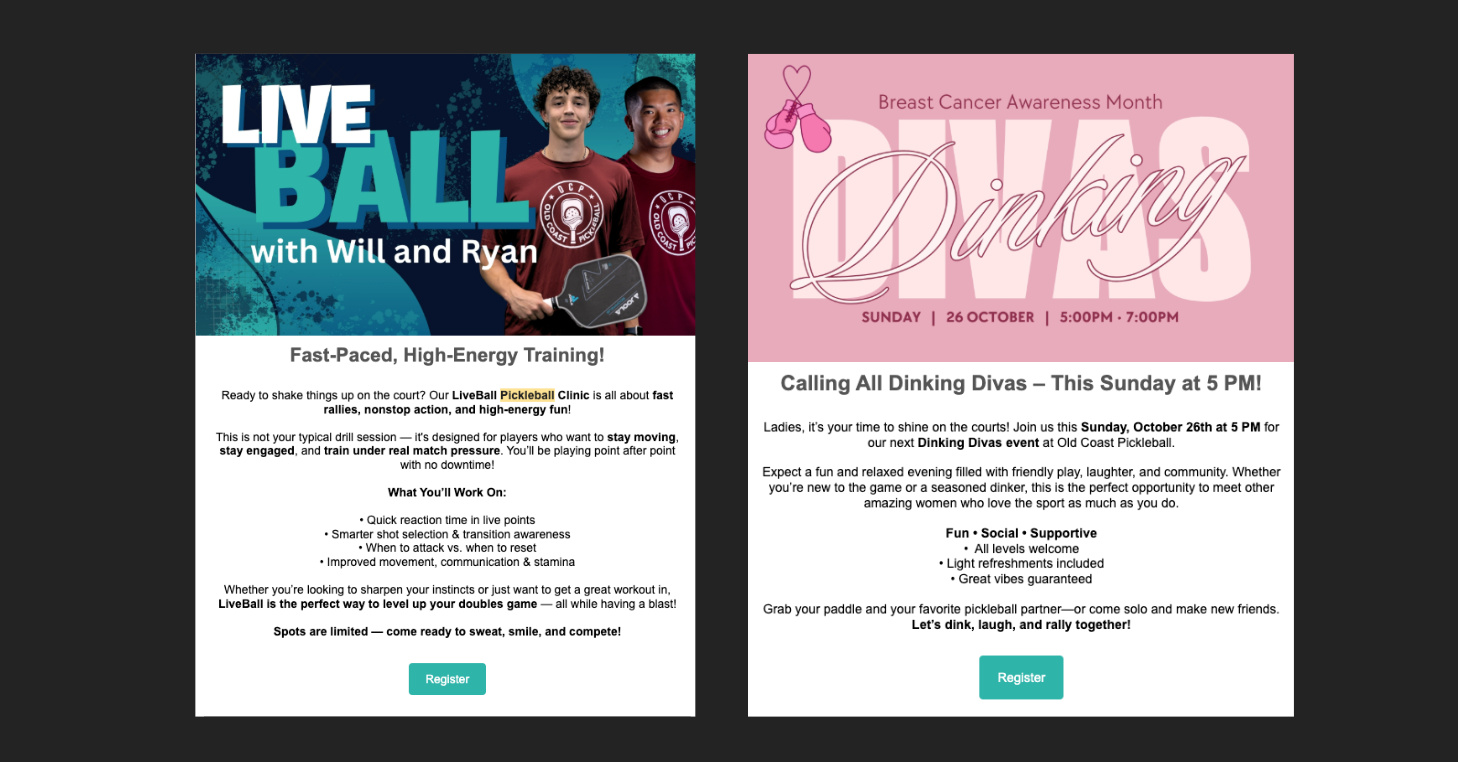
 (PDF)
(PDF)